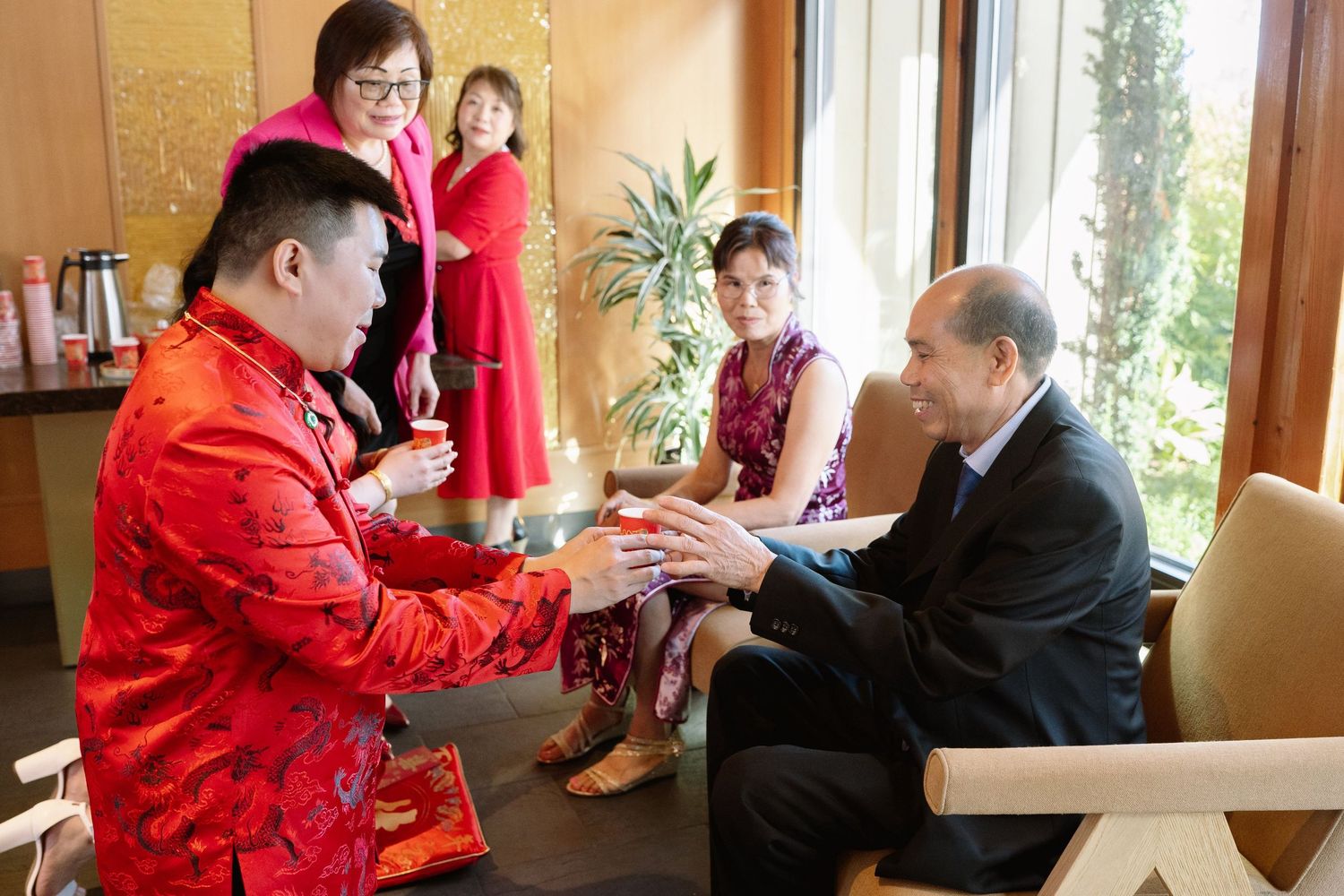
Ask any couple who has had one, and they'll tell you: the tea ceremony is often the most emotional part of the whole wedding. Not the vows, not the first dance — the quiet moment when two people kneel before their parents, offer a cup of tea with both hands, and are welcomed into a new family.
In Chinese culture, it's called 敬茶 (Jìng Chá) — literally, "to respectfully offer tea." And once you've seen one, you understand why it has lasted for centuries.
What Is the Tea Ceremony?
The tea ceremony is the moment a marriage becomes official in the eyes of the family. The couple serves tea to their parents, grandparents, and elders — in order, from oldest to youngest — and in doing so, formally greets each person by their new family title: mother, father, grandmother, aunt, uncle.
It's intimate by design. Unlike the wedding ceremony itself, the tea ceremony is usually just family and the people closest to the couple. No audience, no performance — just gratitude, up close.
Why Tea?
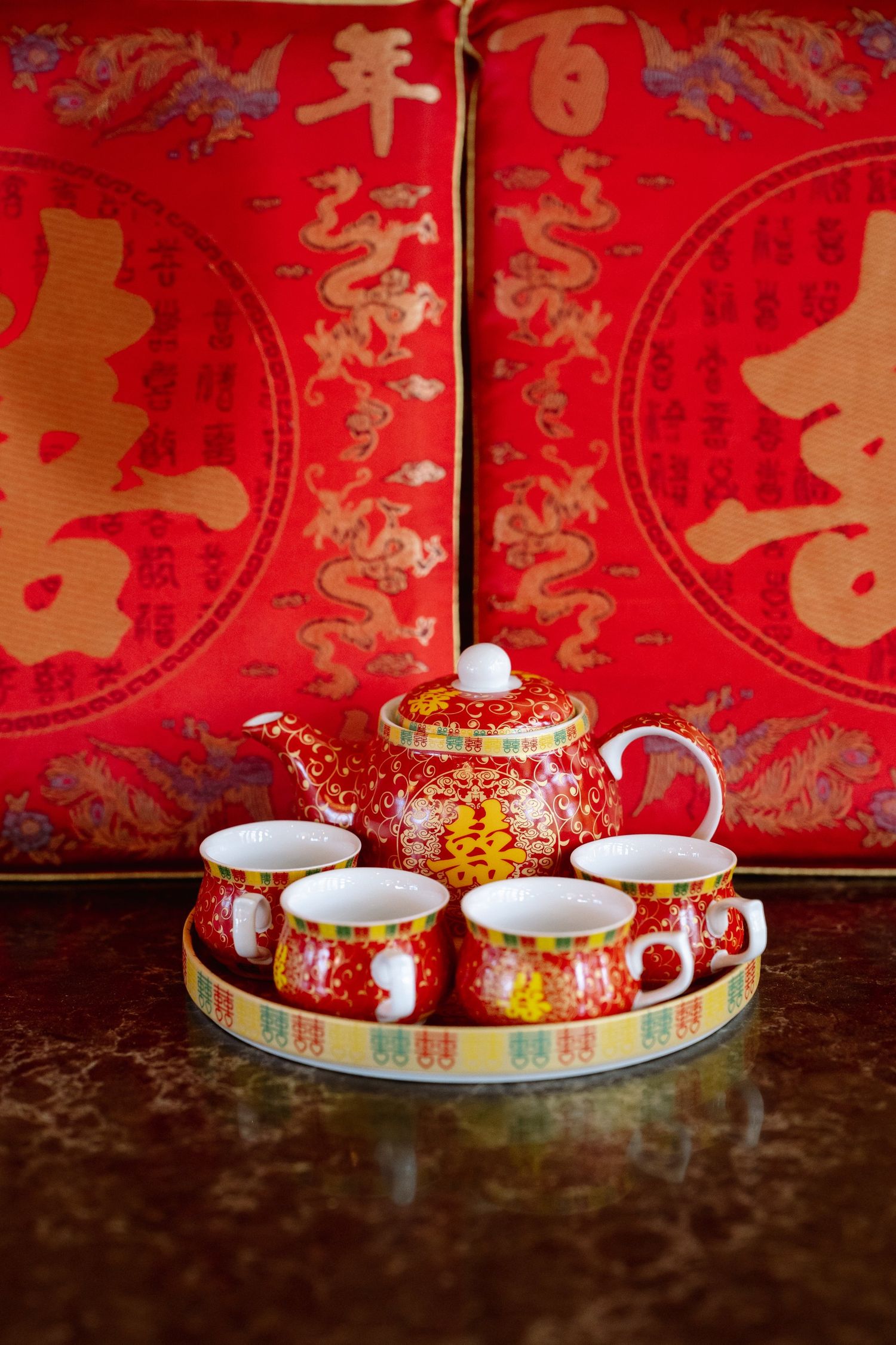
In Chinese culture, tea is far more than a drink. Serving tea is a gesture of respect — the same gesture a younger person offers an elder every day, made formal and sacred for a wedding day.
The tea itself is sweet, often brewed with red dates and lotus seeds. Every ingredient means something: red dates for good fortune and sweetness in the marriage, lotus seeds for fertility and the hope of children, longan for completeness. Nothing in the cup is an accident.
And the colour red is everywhere for a reason — in the couple's outfits, the tea set, the envelopes. Red means luck, joy, and prosperity. A wedding dressed in red is a wedding wishing itself well.
What Happens, Step by Step
Every family does it a little differently, and regional traditions vary — but the shape of the ceremony is usually the same:
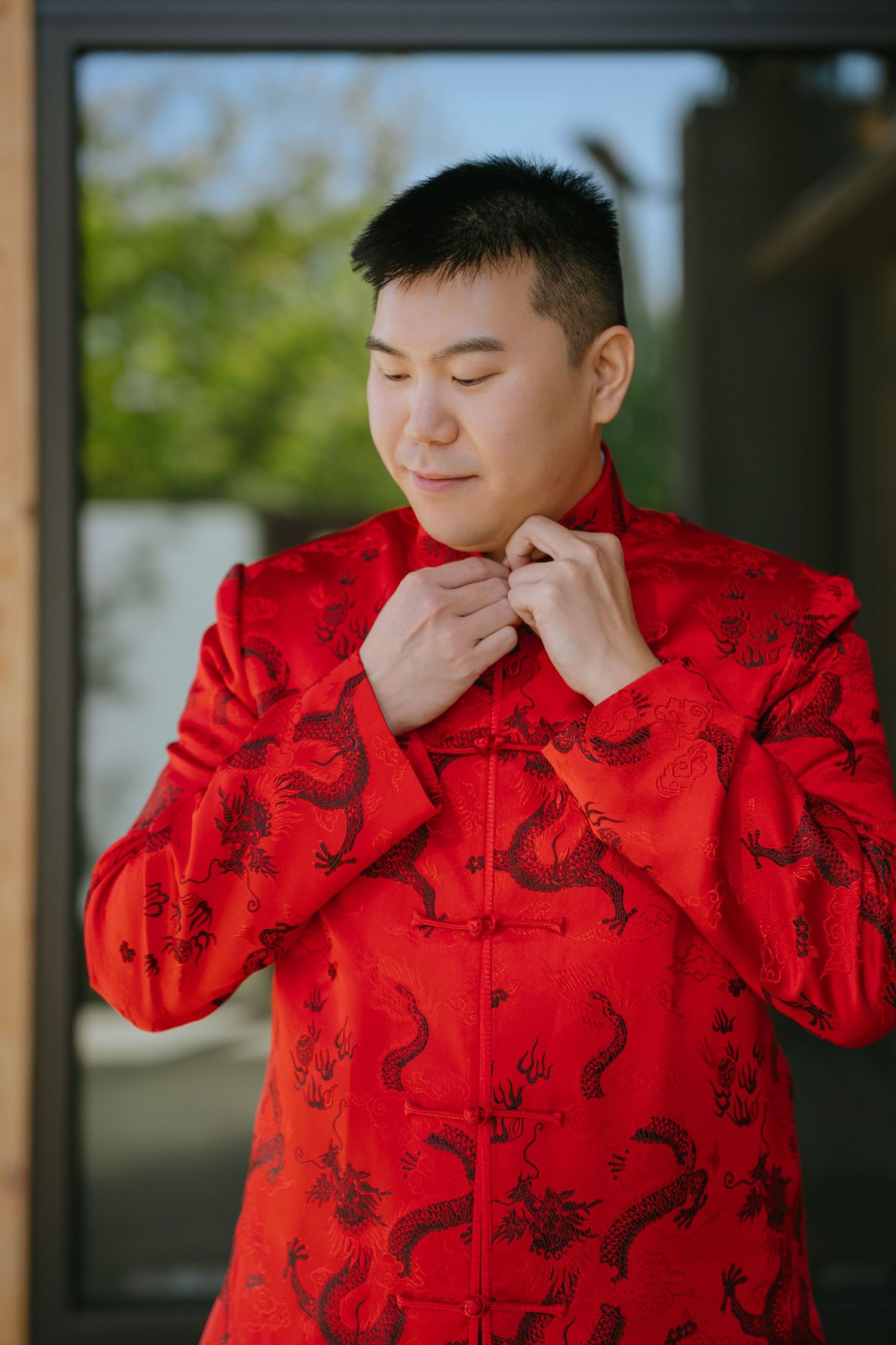
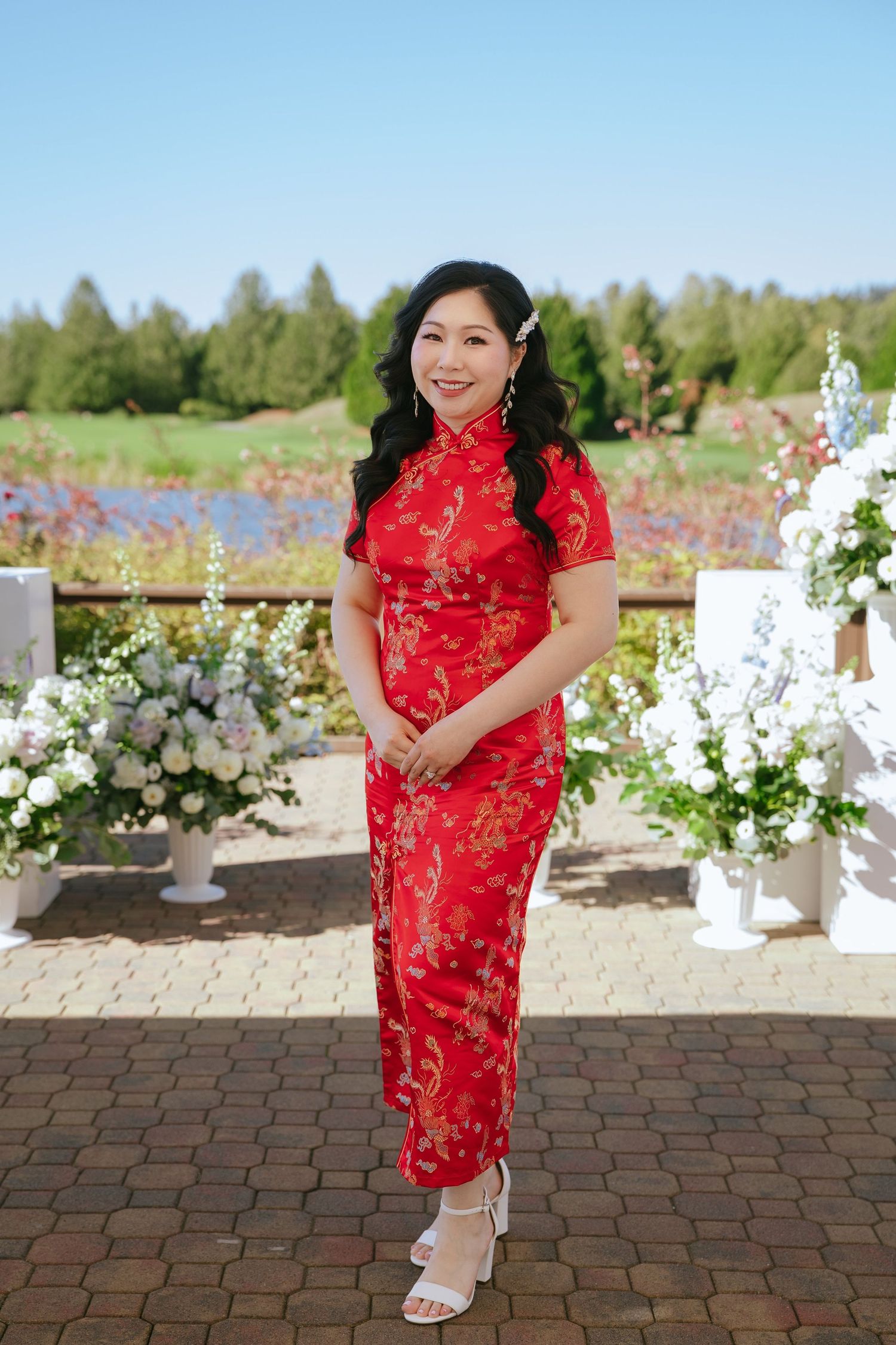
1. The couple dresses for it. Many couples change into traditional dress for the tea ceremony — a red qipao for the bride, a matching jacket for the groom — even if the main ceremony is in Western dress. It's a visible way of honouring where they come from.
2. They serve, elder by elder. Kneeling or bowing, the couple offers tea to each elder with both hands. The elder takes a sip — accepting the couple, and the marriage, into the family.
3. The elders answer with blessings. In return, each elder offers a blessing and a red envelope — a hóngbāo — containing money for the couple's new life together. Some families also give gold jewellery, like bangles or jade bracelets, as symbols of wealth, longevity, and protection.
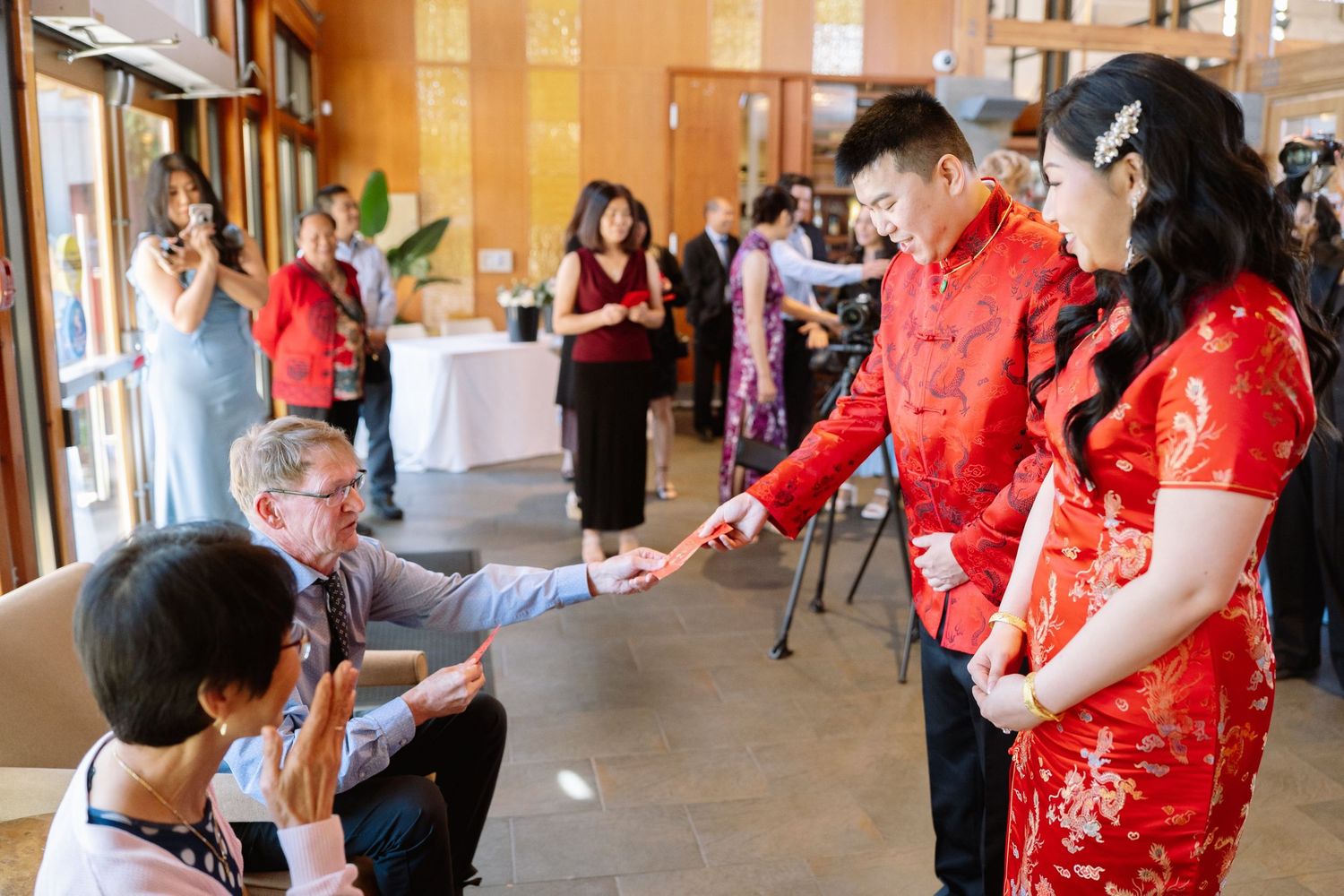
4. And then, it's official. Once the tea has been served and received, the couple is recognised as husband and wife within both families. In many weddings, this is the moment the tears come — parents who held it together through the whole ceremony finally let go.
When Does It Happen?
There's no single rule. Some couples hold the tea ceremony on the morning of the wedding, before the main ceremony. Others hold it the day before, as its own celebration — which is a lovely option, because it gives this quiet ritual its own space instead of squeezing it between hair and makeup and the ceremony timeline.
If you're planning one, my honest advice as a photographer: give it room. Don't rush it. The tea ceremony rewards slowness — the light, the details, the faces of the elders are all worth time.
Why I Love Photographing It
As a photographer, the tea ceremony is a gift. Nothing in it is posed. The couple isn't performing for a camera; they're looking at their parents, and their parents are looking back at them. The frames that come out of it — a father's hand closing around a teacup, a grandmother's tears, the red envelopes changing hands — are the ones couples come back to, years later, more than almost any other photo from the day.
If you're planning a wedding that includes a tea ceremony, I'd love to photograph it — quietly, and with the respect it deserves.
Planning a wedding with a tea ceremony? Explore my wedding photography packages or get in touch to check your date.
— Julia, Silver Moon Photography | Vancouver wedding photographer